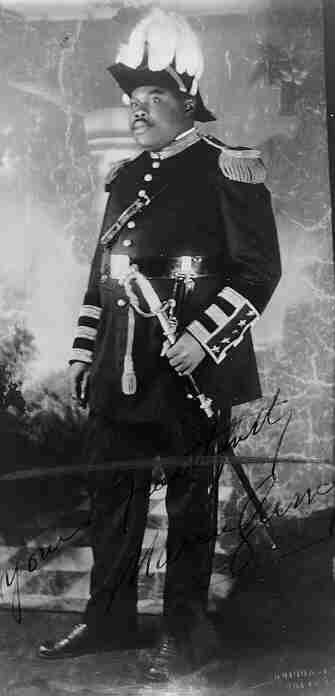
About Marcus M. Mosiah
Marcus Mosiah Garvey’s story in Toronto is not just about one man passing through the city. It is about how Toronto became one of the most important Canadian centres of the Universal Negro Improvement Association, a place where Black people gathered to organize, celebrate, learn, and build community. Garvey visited Toronto multiple times, and the city’s UNIA members turned those visits into lasting institutions and traditions.

The Toronto story begins at 318 Spadina Avenue, where West Indian men formed the Coloured Literary Association in April 1919. That group became the seedbed for Toronto’s UNIA. After a charter was received, the Toronto division was officially established on December 1, 1919. Before the organization secured a permanent home, meetings were also held in rented quarters at 339 Queen Street West.
Garvey’s early Toronto presence is especially well documented in the winter of 1919–1920. Research from the University of Waterloo shows that Garvey and Amy Ashwood Garvey split their time between Montreal and Toronto from December 26, 1919 to January 8, 1920, and held three Toronto meetings on January 5, 6, and 7. These were not casual appearances. They were working visits tied directly to building the UNIA in Canada.
In 1925, Toronto UNIA members purchased 355 College Street, and that address became the city’s Liberty Hall for decades. City records say the building hosted civic meetings, legal clinics, theatrical events, employment workshops, concerts, dances, and fashion shows. Garvey visited Toronto three times and addressed members at that hall, and in 1937 he launched the School of African Philosophy there to train future UNIA leaders.
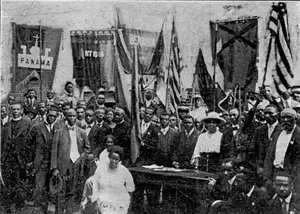 One of the most powerful expressions of Toronto Garveyism was the Big Picnic in Port Dalhousie, near St. Catharines. Beginning in 1924, the Toronto UNIA organized this annual Emancipation Day gathering, and it grew into one of the great Black community events in Ontario. It featured church services, amusement rides, baseball, races, dancing, vendors, restaurants, and swimming. For many Black Torontonians, it was the social event of the year.
The Big Picnic was also bigger than leisure. It connected Black communities across Ontario and drew visitors from places like Rochester, Buffalo, and Niagara Falls. At its height, it attracted upwards of 8,000 people. Museum of Toronto notes that Garvey attended the annual Big Picnic in St. Catharines in 1938, showing how closely Toronto’s public celebrations were tied to the wider Garvey movement.
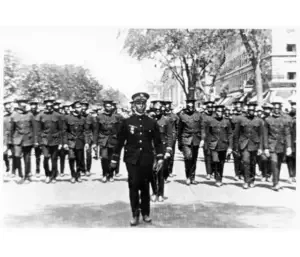 Toronto mattered to Garvey because it was both local and international at the same time. The city hosted UNIA regional conferences in 1936 and 1937, and an international convention in 1938. By then, Toronto was not just a stop on the map. It was one of the places helping to carry Garvey’s message across North America. Through the UNIA sites at Spadina, Queen, and College, and through traditions like the Big Picnic, Garvey’s Toronto legacy became part of Black Canadian history in a lasting way.